Coloring Montessori Toy for Kids Laser: Embroidery Review
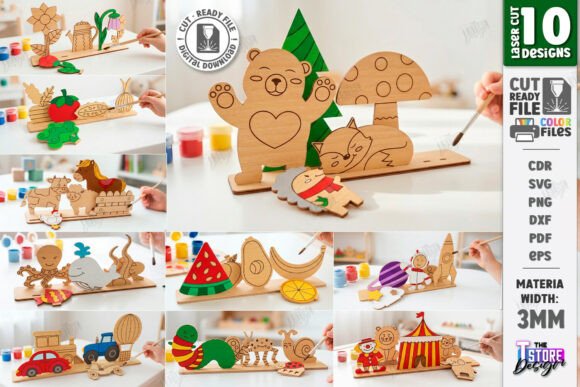
When I first opened the file for Coloring Montessori Toy for Kids Laser, I wasn’t looking at it as a woodworking project. My eye went straight to the clean, uncluttered shapes, the soft storytelling of farm animals and space motifs, and the way the design invites a child’s hand to color it in. That’s exactly the kind of feel I want when I’m choosing a design for baby blankets, toddler tees, or a quiet learning tote bag. A lot of laser cutting files never see the inside of an embroidery machine, but this one has a structure that makes me think it could actually work—provided you know what you’re doing.
I’ve been in the embroidery business long enough to spot a line art file that can translate into thread. What caught my attention here was the balance between simplicity and thematic richness. There’s a natural Montessori vibe: clear outlines, recognizable objects, and no visual clutter. For a machine embroidery design, that means fewer tiny stitches to misalign, and a higher chance that the final stitch-out will look intentional rather than muddy.
First Impression: Calm, Educational, and Surprisingly Versatile
The mood of the Coloring Montessori Toy for Kids Laser design is gentle and curious. You see a cow, a tractor, a rocket—classic childhood icons arranged in a way that feels like a coloring book page. That’s a huge plus for embroidery. Coloring book styles often convert beautifully into running stitch or satin stitch outlines, giving you a crisp, hand-drawn effect that parents love. I immediately pictured a cream-colored sweatshirt with that design stitched in a soft charcoal thread, or a pastel quilt block with each element outlined in a different muted color.
Because it’s originally a laser cut SVG, the lines are all there, but they’re meant for cutting, not stitching. I had to mentally adjust for that. The lines are uniform, with no designated stitch direction or underlay. That’s fine for an experienced digitizer. If you’re planning to use this as a base for an applique design, the shapes are blocky enough to cut cleanly from fabric, and the open centers (where the “coloring” would happen) give you a nice canvas for adding fabric textures or even a second layer of stitching.
From Laser Cut File to Embroidery Thread: A Practical Conversion
I won’t pretend this is a ready-to-stitch embroidery file. It’s not. What you’re getting is a digital design asset that can be the foundation for a custom embroidery design. But for someone who knows their way around digitizing software, this is a goldmine. The animal and space motifs are simple enough that you can auto-trace them and get a clean set of running stitches. The farm theme is cohesive, so you can pull individual elements—a pig, a star, a barn—and use them as standalone mini designs for cap patches or towel corners.
One thing I’ve learned: not all SVG files are created equal. Some have hidden double lines or tiny nodes that cause jump stitches. Before you commit to a full embroidery run, open the file in vector software and check for unnecessary overlaps. I’ve seen similar laser cut files that needed a little cleanup, but the design’s overall skeleton looked solid. The Coloring Montessori Toy for Kids Laser set has a farm and space mix, which means you can diversify your product line without buying multiple design packs.
Real Project Test: A Custom Baby Shower Gift Set
To give this a real-world evaluation, I mentally walked through a project I’m actually working on: a baby shower gift for a friend who’s a Montessori teacher. I wanted a matching tote bag and onesie set that felt handmade and educational. The plan was to use the farm portion of the design on a natural linen tote, and the rocket and stars on a soft cotton onesie.
For the tote, I chose a medium-weight linen with a subtle slub. The design’s outlines were digitized as a running stitch with a slight increase in stitch length to avoid puckering. I used a beige polyester thread, which gave a tonal look that felt sophisticated. The open centers of the cow and tractor stayed empty, allowing the fabric to show through. That’s a beautiful effect—it’s almost like an unfinished embroidery that invites the child to color with fabric markers later. The onesie got the space elements in a very light blue, stitched with a fine satin stitch outline. Because the shapes are small, I kept the stitch width narrow and tested on a scrap of rib knit first. The result was a charming, minimalist set that looked store-bought but felt personal.
That project confirmed something I’ve suspected for a while: designs that come from the laser cutting world often have a clean, open aesthetic that fits the modern nursery trend perfectly. There’s no overdone fill, no heavy density. It’s all about the outline, and that’s exactly what many customers want right now.
Where This Design Shines in Embroidery
I’d feel confident using Coloring Montessori Toy for Kids Laser on a range of products. The open style works beautifully on baby clothes—think soft interlock onesies, muslin swaddles, and lightweight knit dresses. The design doesn’t scream for attention, so it’s perfect for small businesses that want to offer a subtle, upscale children’s line. You can stitch it on a pocket corner, a bib neckline, or the hem of a crib sheet without overwhelming the item.
It’s also a strong candidate for personalized gifts. Imagine adding a child’s name in a delicate font above the rocket ship, or stitching a birth date under the tractor. Because the design is uncluttered, there’s plenty of room to combine it with lettering without making the layout feel busy. For Etsy sellers, this is a major selling point—customization options that don’t require a complete redesign.
I wouldn’t hesitate to use this on kitchen towels either. The farm animals would look adorable on a flour sack towel, especially if you switch to a red or navy thread for a more traditional kitchen vibe. The space theme, on the other hand, could be a hit on a sleep mask or a pajama set for a space-loving toddler.
Where You Should Stitch with Caution
Like any design that wasn’t originally built for embroidery, the Coloring Montessori Toy for Kids Laser file has a few points that need careful handling. First, the small details. The SVG might include tiny stars or dots that look great in a laser cut but become a mess in thread if you don’t simplify them. I’d recommend scaling the design up if you’re working with a small hoop—anything under 4x4 inches might lose the charm of those fine lines. For a 4x4 hoop, I’d isolate just one or two animals and leave the rest out.
Fabric texture is another thing to watch. The running stitch outlines can get lost on a heavily textured fabric like terry cloth or fleece. If you’re stitching on a textured baby blanket, consider using a thicker topstitching thread and a fresh needle. On dark fabrics, a light thread will make the design pop, but you’ll need to double-check your tracing because any stray stitch will be glaringly obvious. I always test on medium-tone fabric first, then move to lights and darks once I’m confident the pathing is clean.
For caps and curved surfaces, I’d be selective. The farm layout is fairly horizontal, so it might work on a structured cap front, but the space elements could get distorted. If you’re planning a hat project, take the time to adjust the design in your hoop software and maybe break it into smaller pieces.
Practical Designer Notes Before You Stitch
I can’t stress enough: always test on scrap fabric before you commit to the final garment. Even if you’ve digitized the design yourself, the thread tension and fabric type can change the look. I’d recommend a medium-weight cutaway stabilizer for most applications, and a wash-away topping if you’re working with a napped fabric. The design’s open center means you don’t have to worry about bulletproof density, but you do need to make sure the outline stitches are secure.
Check your thread color contrast carefully. The Coloring Montessori Toy for Kids Laser design is essentially a line drawing, so the thread color becomes the whole personality. A soft gray on a cream background gives a vintage schoolhouse feel; a bright, primary red feels playful and commercial. I like to mock it up in black and white first to see the balance, then test a few color palettes. Don’t underestimate how much a single thread color change can shift the entire mood.
If you’re selling the finished product, be mindful of the licensing. The file is listed as a laser cut design, but many SVG creators allow commercial use of physical items made from the file. Still, you should confirm that digitizing the design for embroidery and selling the embroidered products falls within the license terms. I always keep a record of the license in my project folder, just in case a customer asks.
The End Product: What Customers Will See and Feel
When a customer picks up an item stitched with this design, they’re not going to think about laser cutting or SVG nodes. They’ll see a thoughtful, handmade piece with a quiet, educational charm. That’s the real value of the Coloring Montessori Toy for Kids Laser design. It gives you a starting point to create something that feels like a modern heirloom, not just another mass-produced item.
For embroidery businesses, that’s a powerful distinction. The design’s simplicity encourages repeat customers because it’s versatile enough to build a whole collection around. You can offer a farm series, a space series, or mix them into a larger “learn through play” line. The open shapes invite creative color blocking, fabric mixing, and even hand-embroidery touches that add value and justify a higher price point.
I’ve seen too many embroidery designs that try to do everything and end up looking stiff. This one knows what it is—a gentle, child-friendly outline that leaves room for the fabric and the stitcher’s interpretation. Whether you’re making a boutique baby gift, a craft fair staple, or a personalized market offering, the Coloring Montessori Toy for Kids Laser design can be a surprisingly strong ingredient in your embroidery library. Just treat it with the same care you’d give any design: test, adjust, and let your thread bring the coloring-book magic to life.
I’ll be keeping this one in my back pocket for the next baby season, and I have a feeling it’s going to become a quiet favorite with my customers who appreciate the Montessori aesthetic. If you’re a maker who loves turning vector files into stitched treasures, this is worth a closer look.