Marble Run Race Laser Cut Montessori: Toys Amp Laser Cutting
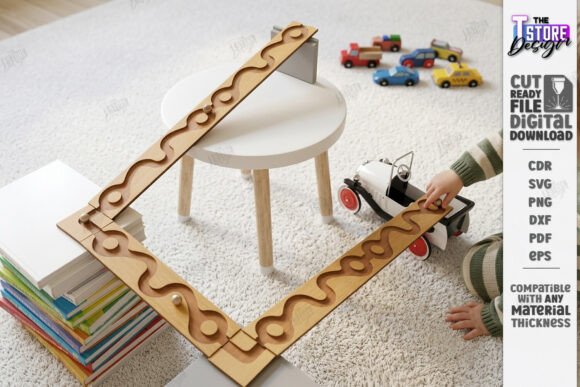
I’m staring at the download folder for a new batch of potential shop assets, and the Marble Run Race Laser Cut Montessori file sits there like a quiet promise. I’m a digital product creator who’s been selling on Etsy and Creative Fabrica for years, and I know the difference between a file that looks good in a preview and one that actually helps a customer build a product worth buying. This one is a laser cut design for a wooden ball run track — a DIY gravity maze that blends Montessori learning with the kind of construction toy that parents and teachers love. The description calls it a Wooden Ball Run Track Laser Cut Marble Run Maze Montessori STEM Toy for Kids, Glowforge Ready Cut File, Educational Physics Toy, DIY Gravity Track System, 3mm Plywood Construction Toy, Preschool Fine Motor. That’s a mouthful, but it’s also a checklist of what sells right now in the Toys Amp category on creative marketplaces.
My first impression is that this sits at the intersection of educational play and modern maker culture. The mood is clean, precise, and slightly rustic — think natural wood, soft curves, and a sense of quiet discovery. The visual personality leans toward minimal and premium, not loud or cartoonish. This isn’t a flashy plastic toy; it’s a wooden ball run that parents will set up on a sunny kitchen table and film in slow motion for Instagram. The buyer you can attract with this asset is a crafty parent, a Montessori teacher, a grandparent with a laser cutter, or a small business owner who makes wooden toys at craft fairs. It’s a niche that values quality over quantity, and the aesthetic of this design file fits that perfectly.
What Makes This Laser Cut File a Smart Digital Product
As a seller, I’m not just looking at the pretty picture. I’m thinking about how this graphic design asset can be packaged, priced, and presented. The file is a commercial design ready for Glowforge and similar machines, with cut layers optimized for 3mm plywood. That’s a practical detail that matters. It means the end user doesn’t have to guess about kerf or material thickness. For me, this could be sold as a standalone digital download in a shop, added to a design bundle of STEM projects, or even turned into a physical product that I make and sell locally. The commercial license included with the file determines which path you take, so I always read the fine print. Most of my customers want to cut and sell the finished toy, not resell the file itself. That’s the safer, more profitable route for many Etsy sellers.
I can already see this SVG design and the accompanying DXF and PDF files being a cornerstone of a small collection. The fact that it’s a Montessori toy gives it an educational angle that works well in the Toys Amp space. When I list it, I’ll make sure “Laser Cutting” appears in the tags and description because that’s exactly the kind of search term that brings in buyers who own a Glowforge or xTool and want something more than a flat sign. The laser cutting category is crowded with keychains and ornaments, so a full-on moving marble run is a breath of fresh air.
How to Test the Asset Before Publishing a Listing
I never upload a digital product without running it through a real-world checklist. First, I load the cut file into LightBurn and check the line colors, layer separation, and any tiny details that might be too fragile. The marble run includes slender tracks and small pegs, so I’d cut a test piece on medium-grade plywood and see how the parts fit. Assembly needs to be intuitive, so I’ll photograph the steps for a simple instruction sheet — a printable design that adds value and reduces customer questions. That instruction sheet becomes part of the brand identity when I package it with a clean, consistent layout.
Next, I preview the finished toy on a product mockup. A wooden marble run looks best on a light, neutral background — think white oak surface or linen — so I can test how the thumbnail reads at a small size. The visual hierarchy in an Etsy product image is crucial. The first photo should show the entire assembled track, with a marble in motion if possible. A close-up of the layered wood and smooth joints helps build trust. I’ll also test the thumbnail against a dark background to see if the contrast holds up. Often, light wood pops well on a deep navy or charcoal, and that can make a listing stand out in search results.
Where the Marble Run Excels in Product Presentation
This file shines in large product previews and themed bundles. Because it’s a tangible 3D toy, it photographs beautifully, and that visual storytelling can increase click-through rates. I’ve found that educational physics toy listings with a child’s hand in the frame or a short video of the marble rolling down the track get more engagement. So if you’re a seller who can create lifestyle images, this asset will reward you. The printable assembly guide can double as a social media graphic — a carousel post on Instagram showing the build process is a magnet for crafty parents.
In a design bundle, the marble run pairs well with other laser cut toys like building blocks, stacking puzzles, or a balance board. I’ve seen shops create a “Montessori Maker Bundle” that includes several cut files, all with a consistent wooden aesthetic. That kind of commercial design collection can be sold at a higher price point, and the marble run is the hero piece that makes the bundle feel substantial. For small business branding, I’d recommend using the same font style across all listing images. A simple sans-serif for the title and a soft handwritten script for the tagline (“hands-on learning, one marble at a time”) can give the whole shop a cohesive, premium feel.
Where You Need to Be Extra Careful
Not every product idea works for this file. I would avoid using it for tiny sticker details or anything that needs to be shrunk down. The cut lines are designed for a specific scale, and if you try to create a miniature version for a keychain, the tracks will be too fragile. Similarly, don’t force this into a t-shirt design or mug design — the appeal is in the physical construction, not a flat graphic. The PNG design of the cut layout isn’t meant to be a sublimation graphic; it’s a technical blueprint. Use it for what it is: a laser cutting file for a real, buildable toy.
Also, check the file resolution and line cleanliness. Sometimes, downloaded laser files have duplicate lines or open paths that can confuse a machine. I always run a quick “join” and “weld” check in my software before cutting. If you’re selling the file as a digital download, organize the folder clearly: one folder for the SVG, one for DXF, one for PDF instructions, and a README with material recommendations. Messy file delivery leads to bad reviews, no matter how good the toy is.
Font Pairings and Branding for Your Shop
When I create the cover image for the listing, I test a few font styles to see what fits the Montessori vibe. A serif font like Playfair Display gives a classic, educational feel. A sans serif like Montserrat keeps it modern and clean. For a softer touch, I’ll try a script font like Sacramento, but only in small doses — maybe for the word “Montessori” in the title. A handwritten font can work for the child’s name if you’re selling a personalized version, but I’d avoid anything too playful that cheapens the wooden aesthetic. A display font with bold, rounded letters might pair well with the marble run’s organic shapes. The key is consistency: use the same font family across all your product mockups, and your shop will instantly look more professional.
Real Shop Scenario: From File to a Collection
Let me outline how I’d actually use this. I’m preparing a new collection for a creative marketplace like Etsy, focusing on STEM toys for preschool fine motor development. I’d start by testing the cut on 3mm birch plywood, sanding the pieces lightly, and filming the marble run in action. That video becomes the second listing image. I’d create a printable PDF with clear assembly steps, a material list, and safety notes — all designed in Canva using a template I already have. I’d set the listing as a digital download priced at $5.99, with a license that allows customers to make and sell the finished physical toy. Then I’d create a social media graphic — a carousel post showing the toy from flat plywood to working marble run — and promote it to my crafty audience. I’d also consider adding it to a design bundle of three laser cut toys, priced at $12.99, because bundles often convert better than single files.
During testing, I’d notice that the toy works best for children ages 3 and up, and I’d mention that in the listing. The educational physics toy angle is a strong selling point, so I’d use phrases like “explore gravity and momentum” in the description. The commercial license is essential — I’d make sure it explicitly allows my customers to sell the finished toy at craft fairs and online, as long as they don’t resell the digital file. That clarity builds trust.
Final Seller Thoughts on the Asset
After going through the entire process, I’d say the Marble Run Race Laser Cut Montessori is a solid addition to a digital product shop. It’s not a quick-turn clipart set; it’s a design asset for makers who value craftsmanship. The laser cutting community is hungry for projects that are more than flat decor, and this wooden ball run delivers. It fits naturally into the Toys Amp category, attracts a thoughtful buyer, and gives you plenty of opportunities for visual storytelling. As long as you test the cut, organize the files neatly, and present it with clean, light-filled photography, you can turn this one file into a commercial design that keeps selling. And for a small business branding win, pair it with a consistent font and a soft color palette that echoes the natural wood — your shop will look like a curated collection, not just a jumble of random downloads.