Mini Puppet Theater Laser Cut SVG: Toys Amp Design Review
Opening a design asset always starts with a split-second gut check. The Mini Puppet Theater Laser Cut Kids SVG landed in my downloads folder with a name that instantly sparks a dozen creative directions. As a designer who regularly works with small brands, handmade businesses, and educational content creators, I look for files that balance charm with real-world usability. This laser-cut-inspired vector collection immediately felt like a smart, versatile addition to a graphic design asset library, especially for projects involving children’s storytelling, imaginative play, or classroom visuals.
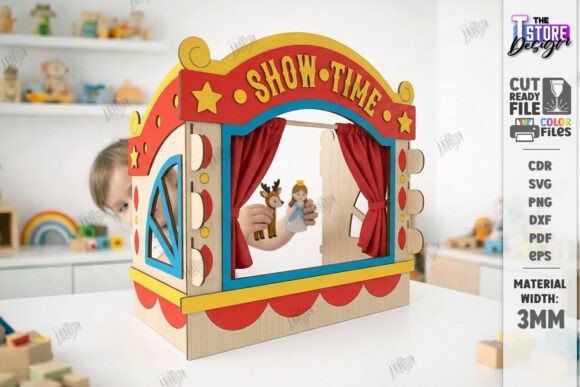
The visual mood is deliberately nostalgic, yet clean enough to work in modern layouts. The artwork reads as a tabletop puppet show, blending circus tent curves, castle turrets, and a hint of vintage theater framing. There is an architectural dollhouse quality that feels warm and tactile, exactly the kind of aesthetic that performs beautifully on packaging design for handmade toys, social media graphics for family brands, and printable design products sold in creative marketplaces. The silhouettes and linework suggest a laser-ready wood toy, which makes the file a natural fit for laser cutting mockups, sublimation on wooden boards, or even engraved stationery mockups. I immediately pictured a client — a boutique wooden toy company launching a new line of circus-themed finger puppets — using this asset as the hero visual for their brand identity and product packaging.
What makes this asset stand out from generic clipart is the personality baked into the shapes. There is a subtle storytelling quality: the arched stage opening, the scalloped curtains, the little star accents. It feels like a design bundle element that could anchor a full collection, not just a one-off decoration. For a small business branding project, I could see this working as a recurring motif across a label, a thank-you card, and a website header, building a consistent visual language that feels playful without being childish.
First Impression and the Mood It Creates
When I dropped the SVG into Adobe Illustrator, the first thing I noticed was the balance between positive and negative space. The puppet theater frame is defined by bold cutout shapes, reminiscent of a wooden toy that would be snipped from a sheet of plywood. The mood it creates is one of wonder and hands-on creativity. It instantly transports the viewer to a kindergarten storytelling corner, a rainy day puppet show, or a handmade toy fair. This emotional pull is powerful for marketing visuals and editorial design aimed at parents, educators, and gift buyers.
The style leans toward a folk-art or craft-market aesthetic, but the lines are precise enough to pass as a modern design element in a clean, minimal layout. The circus-and-castle mashup gives it a dual appeal: one side whimsical and fantastical, the other structured and classic. This duality means the asset can morph easily between a fairy-tale poster, a classroom pretend play sign, or a product label for a wooden toy set. In the Toys Amp category, where visual distinction is everything, this kind of flexible storytelling asset is gold.
Tactical Design Situations Where the Asset Excels
In real client work, I rarely use a design asset exactly as it arrives. I test it in multiple scenarios. Here’s where the Mini Puppet Theater Laser Cut Kids SVG performed exceptionally well:
- Product packaging and label design: Placed on a kraft paper background, the laser-cut silhouette effect comes alive. It instantly elevates a simple box into a premium handmade toy experience. The transparency of PNG files (if included) makes it easy to overlay on textured surfaces.
- Social media graphics and Pinterest pins: The theater shape is a natural container for text. I used it as a frame for a quote about play, and the composition felt intentional and polished. The whimsical outline draws the eye in a crowded feed, making it a strong commercial design asset for Instagram and Canva templates.
- Storytelling props and educational printables: This is where the file truly shines. Pairing the theater with finger puppet silhouettes yields a complete classroom activity kit. The printable design possibilities are huge — from storytelling dice to coloring pages to dramatic play center signs.
- Brand identity for handmade businesses: A local toy maker could use this as a secondary logo mark, a favicon, or a watermark on behind-the-scenes photos. It brings an artisanal, authentic feel that aligns with the values of handmade and small-batch production.
- Sublimation and print-on-demand: On a tote bag or a child’s t-shirt, the laser-ready wood toy aesthetic translates into a trendy, crafty look. Placed on a light wood-toned mug, it feels like a carved heirloom piece. The sublimation design potential is strong, especially for marketplaces like Etsy where buyers seek unique, story-driven gifts.
When the Asset Needs a Careful Hand
No design asset is a one-size-fits-all solution. In my tests, I found a few spots where the Mini Puppet Theater Laser Cut Kids SVG needs thoughtful placement:
- Small-scale applications: The theater outline contains delicate interior details — star shapes, curtain folds, tiny stage elements. When scaled below 1.5 inches, those details begin to fill in or lose clarity, especially in print. For a website favicon or a tiny mobile button, you would need to simplify, or use a stark silhouette version.
- Low-contrast color schemes: On a busy patterned background or a mid-tone canvas, the intricate cutout aesthetic can become muddy. I always test this asset on a solid, clean backdrop or invert it to white for dark backgrounds to preserve the visual hierarchy.
- Corporate or minimalist branding: If the client is a sleek tech company or a finance startup, this whimsical theater design will feel dissonant. The asset naturally leans toward playful, educational, and handmade niches. Save it for brands that embrace warmth and imagination.
- Typography-heavy layouts: Placing long paragraphs of text directly over the busy theater silhouette can hurt readability. Instead, I recommend using the asset as a framed graphic element, with type placed outside or in a clean area within the stage opening.
How the Asset Influences Readability and Brand Perception
In my experience, the right illustration can elevate a brand’s trustworthiness and emotional appeal. The Mini Puppet Theater shape immediately signals “handcrafted,” “story-driven,” and “carefully curated.” For a small business branding project, this perception is invaluable. Customers scrolling through a digital marketplace make split-second judgments based on visual coherence. A product photo featuring this laser-cut motif on a hangtag or a packaging insert tells a story of quality and attention to detail.
When used as a logo design element, it injects a sense of heritage and creativity. I tested it paired with a clean sans serif font — the contrast between the ornate puppet theater and the simple type created a balanced, professional lockup perfect for a children’s bookstore or an educational toy brand. With a script font, the result felt too decorative; with a handwritten font, it gained a charming, storybook personality. The key is to let the asset’s built-in theatricality do the heavy lifting while keeping the typography restrained.
Practical Designer Tests Before Client Delivery
Before I ever present a design asset to a client, I run a standard battery of checks. For the Mini Puppet Theater Laser Cut Kids SVG, these steps were crucial:
- Test in pure black and white: I stripped all color and viewed the file as a solid silhouette. The shapes remained recognizable, which means it will work in single-color screen printing, stamp designs, and engraving mockups. This is critical for a laser cutting asset.
- Check contrast on light and dark backgrounds: On a white background, the linework is crisp and airy. On a dark navy or charcoal, I needed to invert the artwork to white for the same legibility. The SVG file should allow easy color swaps.
- Preview at thumbnail and hero sizes: At 250px wide, the theater still reads as a puppet show. At 2000px, no detail pixelation occurred. The vector scalability is solid, making it safe for everything from a sticker design to a large wall decal.
- Place on real product mockups: I dropped the design onto a kraft box mockup, a wooden toy box, and a children’s book cover. The sense of dimension and craft jumped out immediately. It passed the “real product” test with flying colors.
- Review file formats and editability: The SVG was layered and well-organized, allowing me to isolate individual elements like the curtain or the stage base. If PNGs with transparency are included, check that the edges are clean and free of artifacts. This is essential for digital product sellers who need to provide ready-to-use files.
- Test with typefaces: I paired the asset with a serif (Playfair Display), a geometric sans (Montserrat), and a child-oriented display font (Luckiest Guy). The sans serif combination was the most versatile; the serif felt classic and could work for a literature-themed project; the display font turned the whole composition into a carnival poster. Knowing these pairing options helps me make quick decisions for client mood boards.
Commercial Use and Licensing Reality Check
For any commercial design project, I never assume blanket permission. Before using the Mini Puppet Theater Laser Cut Kids SVG on a client’s product packaging, a print-on-demand item, or a Canva template sold to multiple users, I verify the included license. Does the purchase come with a standard commercial license? Are there restrictions on reselling the file as-is in a design bundle or a creative marketplace? These questions matter deeply for small business owners and designers who build income streams around digital products. I always recommend keeping a copy of the license agreement and noting any attribution requirements.
In my workflow, I often use assets like this as a component of a larger composition, not as a standalone product. For example, I might combine the puppet theater with custom hand-drawn typography and original illustrations to create a unique classroom poster. This approach typically falls within most extended commercial licenses, but clear communication with the original creator is a best practice I follow rigorously.
Who Should Keep This Asset in Their Toolkit
After a thorough review, I would confidently recommend the Mini Puppet Theater Laser Cut Kids SVG to a specific set of creatives: Etsy product sellers crafting printable play sets, Cricut project designers making wooden decor, small business branding professionals working with toy shops, content creators building educational materials, and packaging design specialists targeting the handmade gift market. It is a rare find that bridges the gap between crafty nostalgia and crisp, usable vector art. For anyone in the Toys Amp space, particularly those who lean into laser cutting aesthetics, this asset is a worthy addition to a commercial design toolkit.
The file’s storytelling power is its greatest strength. It doesn’t just decorate; it sets a scene. In a market flooded with generic clipart, a design asset that carries emotion and sparks a narrative is the one that earns a permanent folder on my hard drive. The Mini Puppet Theater Laser Cut Kids SVG is exactly that kind of asset.