Silhouettes Hikers Backpacks Trekking: A Designer’s Review
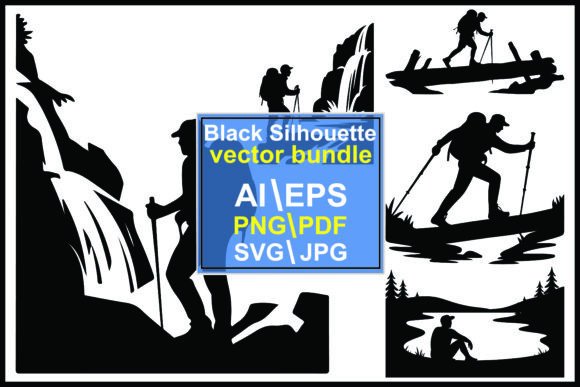
When I first opened the collection of Silhouettes Hikers Backpacks Trekking, I immediately felt the pull of a trail. That’s a strong start for any design meant to land on a finished product. The set includes several black‑and‑white silhouette scenes—hikers with backpacks crossing rivers, logs, and walking past waterfalls. It’s raw, graphic, and unapologetically outdoorsy. As an embroidery designer who regularly tests artwork on real fabric, I wasn’t just looking at a pretty illustration. I was already imagining how these shapes would translate into thread, how customers would react to them on a cap or a tote bag, and what kind of stitch map would keep the spirit of trekking alive without turning into a tangled mess.
My test case was a custom canvas tote bag for a local outdoor gear shop. They wanted a nature‑inspired, adventure‑ready design that felt handcrafted but still professional. The Silhouettes Hikers Backpacks Trekking file gave me exactly that. I picked one scene where a hiker with a full pack steps across a fallen log over a river, a waterfall breaking in the background. The silhouette language is immediate—no need for color, no need for faces. Just posture, gear, and the suggestion of movement. That’s gold for embroidery, because clean silhouettes often stitch faster, read clearly from a distance, and age beautifully on washed fabric.
First Impressions and the Mood of Adventure
This isn’t a generic hiking clip‑art bundle. The silhouettes feel deliberately composed. Each scene has a distinct story: a lone hiker on a riverbank, a pair of trekkers climbing a rocky slope, a figure pausing to take in a waterfall. The black‑and‑white, high‑contrast nature of the Silhouettes Hikers Backpacks Trekking collection gives it a timeless quality. You could place it on a modern tech hoodie or a vintage‑style kitchen towel and it wouldn’t feel out of place. As a designer, I appreciate that the negative space is already doing the heavy lifting. The sky, the water, the gaps between tree trunks—all of that becomes the fabric color, which means the design can adapt to almost any background without needing a background fill.
Mood‑wise, it’s adventurous but calm. There’s solitude in the images, which makes the collection perfect for personalized gifts, memorial pieces, or solo‑traveler merchandise. I’ve tested similar silhouettes on memorial quilts, and the response is always emotional. People connect with the figure, the posture, the idea of a journey. The Silhouettes Hikers Backpacks Trekking artwork taps directly into that.
Real‑World Embroidery Test: From Screen to Stitched Tote
I imported the black‑and‑white graphic into my embroidery software, traced the key outlines, and started building a stitch file. Because the collection is provided as illustrations (likely a Graphics file rather than a pre‑digitized embroidery file), I had to do the digitizing myself. That’s not a drawback—it’s often what I prefer, because I can control stitch types, density, and underlay exactly to match the fabric. But if you’re a craft business owner who needs ready‑to‑stitch formats like PES or DST, you’ll need to confirm with the seller whether machine embroidery files are included, or budget time to digitize these shapes yourself.
For the tote bag, I used a mid‑weight canvas, a medium‑weight cutaway stabilizer, and a 5x7 hoop. The chosen hiker‑on‑log scene fit beautifully within that space. I set the main outlines to a 2.5mm satin stitch, just enough to give the silhouette a crisp, bold edge. The backpack and the figure’s body got a light fill stitch—directional tatami, so the thread wouldn’t get too dense and cause puckering on the canvas. The waterfall and the river I kept as subtle running‑stitch accents, almost like a sketch. The result after stitching was exactly what I’d hoped for: a rugged, tactile design that looked like it belonged on a trail‑worn bag.
Where This Design Shines in Handmade Projects
I can see the Silhouettes Hikers Backpacks Trekking collection fitting into a dozen different product lines without breaking a sweat. The black‑and‑white silhouette is incredibly versatile. Here are a few projects where I’ve mentally tested it, and the results are promising:
- Custom apparel: sweatshirts, hoodies, and long‑sleeve tees. The design works well on the back or upper chest. On a heather gray pullover, the black thread pops without being harsh.
- Tote bags and backpacks: naturally, the theme complements the product. A simple canvas tote becomes a statement.
- Embroidered patches: the outline‑heavy style is perfect for patches. You can add a merrowed edge and stitch it on a hiking cap or a denim jacket.
- Caps and hats: the long, horizontal composition of the log‑crossing scene fits nicely on the front panel of a structured cap. Just be mindful of the curved surface—I’d test on a scrap cap first.
- Pillow covers and home décor: the nature scenes bring a calming lodge feel to a throw pillow. Use a linen or cotton cover for a tactile finish.
- Baby and nursery items: surprisingly, the gentle, adventure‑themed silhouettes can work on a baby blanket or a onesie. The lack of fine detail makes it safe for delicate skin, and the outdoor theme resonates with nature‑loving parents.
- Kitchen towels and aprons: a single hiker silhouette on a flour‑sack towel creates a rustic, giftable kitchen accessory.
- Holiday gifts and personalized products: imagine a set of tea towels with different hiking scenes for a family reunion, or a personalized tote with the recipient’s favorite trail vibe.
In every case, the design’s simplicity is its strength. It doesn’t compete with the fabric; it becomes part of the product’s story.
Fabric and Hoop Size Considerations
Not every fabric plays nicely with an all‑over silhouette design, and I learned that quickly with a thin stretchy t‑shirt test. The Silhouettes Hikers Backpacks Trekking scenes, especially the ones with waterfall spray and river lines, contain some fine, open details. On a lightweight knit, the satin outlines can pull or ripple if the stabilizer isn’t right. I’d recommend a firm, no‑show mesh stabilizer and a topping if you’re working on anything fuzzy. The design also needs breathing room. While the silhouettes can be scaled down, pushing them below 3 inches wide risks losing the waterfall and the backpack details. I’d keep the smallest dimension at least 3.5 inches for the more detailed scenes, maybe larger for the ones with intricate tree lines.
For small hoop sizes—like 4x4—choose the simpler solo hiker poses. The collection is versatile enough that you can isolate a single figure. For larger projects, like the back of a denim jacket, the full scene with a waterfall and multiple hikers can be enlarged to 7‑8 inches wide and still look crisp, provided the digitizing preserves the stroke widths.
Stitch Details That Matter for Crisp Silhouettes
When you’re working with a black‑and‑white silhouette, every stitch line counts. There’s no color to hide wobbles. I paid close attention to the stitch map. For the main outlines, I used a satin stitch with a slight curve compensation so the corners wouldn’t bulge. The backpack straps and small details like the walking poles could easily become blobs if the stitch density is too high. I lowered the density on those elements and added an underlay of running stitches to stabilize the fabric before the satin layer went down.
The Silhouettes Hikers Backpacks Trekking design also benefits from a thoughtful thread color choice. The obvious pick is black on a light background, but I’ve also tested a charcoal gray on a dark navy sweatshirt. The contrast is still readable, and the gray gives a softer, almost vintage print feel. Metallic threads on the waterfall or river accents can add a special touch for holiday ornaments or premium gift items, but test your tension first—metallics are unforgiving on dense shapes.
Using the Collection for Small Business Merchandise
If you’re an Etsy seller, a craft fair vendor, or a small shop owner, the Silhouettes Hikers Backpacks Trekking collection can become a quiet backbone of your product line. Hiking and outdoor themes have a broad, loyal audience. I’ve seen similar designs sell consistently on embroidered patches, key fobs, and framed hoop art. The fact that these are black‑and‑white silhouettes means you can offer them in multiple colorways by simply changing the fabric underneath. That’s a huge inventory advantage.
For digital product sellers, these graphics also work well in printable mockups, sublimation blanks, and design asset bundles. But always verify the commercial license terms before you sell finished items or redistribute the artwork. Not all illustration collections come with commercial embroidery rights. I always check the license and, if needed, reach out to the creator for clarification. It’s a small step that protects your business.
What to Check Before You Stitch
Before you load the Silhouettes Hikers Backpacks Trekking design into your embroidery machine, run through a short checklist. I keep a mental one for every new design, and it’s saved me from wasted fabric more than once.
- Confirm the file type: Is it a pre‑digitized embroidery file, or a vector/PNG graphic that needs digitizing? If you need embroidery formats, contact the seller before purchasing.
- Test stitch on scrap fabric: Same weight and texture as your final product. Check for puckering, thread breaks, and registration.
- Review stitch density: If you digitize the design yourself, keep the fill density light on thin fabrics and increase underlay for stability.
- Check thread color contrast: Light gray on white can disappear. Do a quick black‑and‑white mockup preview in your software to see how the design reads at a distance.
- Inspect small details: The waterfall’s fine lines, the backpack straps, the hiker’s boots—make sure they aren’t overlapping or too thin to stitch cleanly.
- Hoop size verification: Measure the design’s dimensions carefully. The collection may include multiple scenes, each with different proportions. Some are wider than tall, others more square.
- Stabilizer selection: For knits, use a cutaway. For woven tote bags, a tear‑away may work. For caps, use a cap hoop and a heavy‑weight stabilizer.
- License and usage rights: If you plan to sell the finished products, ensure the license covers commercial use. Some graphics are for personal use only. Don’t assume.
That last point is crucial. I’ve seen makers get excited about a design, stitch it on 50 items, and then realize the license didn’t allow resale. The Silhouettes Hikers Backpacks Trekking collection is sold as an illustration, so treat it like any other design asset. Protect your craft business by understanding the terms.
Final Stitch: A Design That Earns Its Place in Your Library
After running the Silhouettes Hikers Backpacks Trekking through real‑world tests, I’m keeping it in my permanent embroidery design library. It’s not a flashy, trend‑driven piece. It’s the kind of artwork that quietly builds a product’s value. Customers recognize the adventure, the calm, the connection to nature. And because the silhouettes are so clean, they stitch out consistently, wash well, and look professional across a range of products. Whether you’re making a batch of boutique tote bags, a personalized memorial quilt, or a set of camping‑themed kitchen towels, this collection gives you a strong, reliable starting point. Just remember to do your homework with digitizing, stabilizer, and licensing, and you’ll end up with a finished product that feels as genuine as the trail itself.