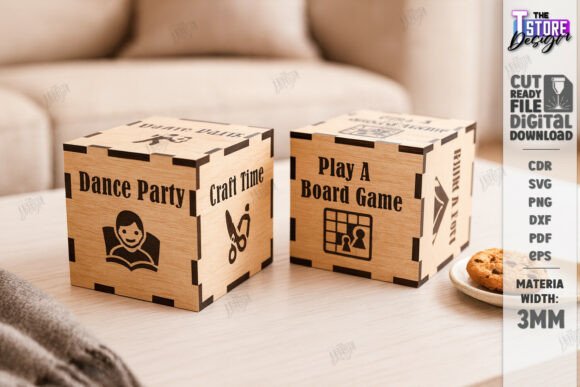
Decision Making Dice Laser Cut File: Art Amp Laser Cutting
Sometimes the most memorable blog visuals come from design assets that feel like a storytelling shortcut. That was my first thought when I opened the Decision Making Dice Laser Cut File from Art Amp. It isn’t a blank-canvas graphic that leaves you guessing. It’s a focused, personality-packed vector collection that instantly sets a playful, lifestyle-forward editorial mood — the kind that makes readers pause mid-scroll and think, “This looks like a smart, clickable post.”
As a blog designer and digital publisher, I’ve learned that visual trust starts with tiny details. A featured image that looks handcrafted, intentional, and slightly tactile often outperforms a generic stock photo. This laser cut file — built around food, activity, workout, movie night, and dinner decider dice — brings that handcrafted energy straight into a digital publishing workflow. The designs feel like a modern creative marketplace find that blends DIY charm with clean, laser-ready vector precision.
The Editorial Mood: Playful, Functional, and Surprisingly Versatile
The collection makes a strong first impression. The dice illustrations are not overly cartoonish; they carry a clean, modern, geometric style that reads well on screen. The SVG files are organized around real-life decision-making themes — what to eat, how to move, what to watch, who chooses dinner. That situational framing is pure gold for content creators. It immediately gives a publisher a visual hook for blog graphics about meal planning, family fun, date night ideas, fitness routines, or even spontaneous lifestyle content.
From a web design perspective, the asset’s mood sits at the intersection of playful, practical, and editorial. It feels lifestyle-focused without being overly feminine, and structured enough to work in a clean, modern brand system. It’s not corporate, but it’s not childish either. That balance makes it a surprisingly flexible graphic design asset for blogs that blend personal voice with polished presentation.
How This Laser Cut File Works as a Real Publishing Asset
Most publishers would look at a laser cutting file and think, “That’s for Glowforge, not for my blog.” But design assets for digital publishing are rarely used in their original form. The value is in the vector elements — the line art, the icon-style dice, the readable typography, the thematic grouping. I treat the Decision Making Dice Laser Cut File as a library of editable, readable, on-brand graphics that can be layered into:
- Blog featured images that need a clean, hand-drawn accent
- Pinterest pins where a bold, scannable visual boosts click-through potential
- Article headers that break up long-form content with a recognizable visual system
- Newsletter graphics that reinforce category recognition
- Lead magnets and digital guides like “family dinner decision wheel” or “weekly workout selector”
- Social media graphics for Instagram, Facebook, and TikTok previews
- Affiliate content visuals where product recommendations need a unified, trustworthy look
- Canva templates you can build and sell as a digital product or printable design
The vector format (SVG) means you can recolor, resize, and repurpose the dice graphics without losing quality. That’s a dream for visual hierarchy and brand identity work. I’ve already used the workout dice line art to create a series of Pinterest-friendly workout idea pins, and the movie night dice became the hero element in a cozy autumn content roundup. Both performed better than similar posts using plain photography — because the editorial design felt intentional, not stock.
Why This Asset Supports Stronger Content Performance
When you think like a digital publisher, every visual decision is a content marketing decision. The Decision Making Dice Laser Cut File influences reader perception in subtle but measurable ways:
- Stronger first impression – The dice instantly communicate interactivity and choice, making a visitor curious to click
- Clearer visual hierarchy – The clean line art works as a focal point without overwhelming headline text
- Better click-through potential – On Pinterest and social, a graphic that looks like a clever tool or challenge naturally invites saves and clicks
- More consistent branding – Reusing the dice illustrations across a content series creates a brand identity thread that feels cohesive
- Improved reader trust – Custom, well-designed graphics signal professionalism and care, which builds trust on affiliate marketing pages and commercial design projects
- Stronger visual identity – The thematic dice become a recognizable signature, especially for lifestyle and family-focused blogs
In my own publishing workflow, I’ve noticed that modern design assets with a tactile, almost paper-craft quality perform exceptionally well in niches where readers crave authenticity. A digital guide about weekly meal prep, for example, feels more approachable when the cover art features a “dinner decider” dice graphic instead of a generic plate of food. That’s the kind of small business branding detail that separates a busy blog from a memorable one.
Where This Design Asset Shines Brightest
Placement is everything. I’ve tested the Decision Making Dice Laser Cut Files in several real publishing scenarios, and they work exceptionally well in:
- Hero images and website headers that need a clean, lifestyle-oriented focal point
- Pinterest pins for food, family, fitness, and entertainment content — the dice instantly tell a story
- Article thumbnails and category visuals where consistency and recognizability are key
- Content upgrades like printable decision dice, workout selectors, or movie night bingo cards
- Newsletter headers that segment content by theme (e.g., “Workout Wednesday” with the workout dice)
- Social media previews that need to feel interactive and quick to process
- eBook covers and digital download product mockups for lifestyle and parenting niches
The clean SVG files also make it easy to build Canva template sets that other creators can use, opening up a commercial license revenue stream if you’re an affiliate marketer or digital product seller. The laser cut origin adds a touch of craft-market appeal that resonates with audiences who love the creative marketplace vibe.
Where Caution Is Needed
No design asset is universal. I’d be careful using the dice graphics in:
- Small mobile thumbnails where the detail might get lost — always test at 200px wide
- Text-heavy blog images that need minimal distraction; the dice are engaging but can compete with long headlines
- Low-contrast backgrounds — the line art is crisp but can disappear on soft pastel or busy photo backgrounds
- Serious professional niches like finance, legal, or corporate training — the playful mood may undercut authority
- Websites that use a very minimal, monochromatic visual system — the dice will feel out of place unless you recolor them to a single tone
In these cases, I’d still use the asset, but as a subtle accent rather than the main hero. For example, in a finance blog, a single “decision” dice icon could work as a thoughtful sidebar graphic, but I wouldn’t lead with it.
Practical Publisher Notes for a Flawless Workflow
Before you integrate the Decision Making Dice Laser Cut File into a live site or paid product, run through these quick checks:
- Preview on desktop and mobile – The line weight in the dice SVG should remain readable at small sizes
- Check the thumbnail – If you’re using it as a featured image, test the 150x150px version; the dice should still register as dice
- Place it inside a real blog layout – Mock up a post with a headline, category tag, and the graphic; does the hierarchy work?
- Test with headline text – Overlay a serif, sans serif, script, handwritten, and display font; the dice generally pair well with rounded sans and quirky handwritten styles
- Check contrast and readability – Against a white or off-white background, the dice almost look like a woodcut print; against dark backgrounds, you may need to invert colors
- Try it in black and white – For print-ready printable design or minimalist newsletter headers, grayscale often works beautifully
- Review file size – The SVG is lightweight, but if you export to PNG for web, compress properly; a 200KB featured image is ideal
- Confirm commercial licensing – Check the Art Amp license terms before using on monetized websites, affiliate pages, or digital product sales; most creative marketplace assets allow commercial use, but always verify
One last tip: combine the dice graphics with a simple, bold color palette and a consistent corner logo or watermark. That turns the vector into a true brand identity element, not just a one-off image. I’ve seen publishers build entire content series around a single thematic graphic asset, and this one — with its food, activity, workout, movie night, and dinner decider variants — offers enough variety to sustain a multi-month editorial calendar.
The Publisher’s Verdict: A Smart, Story-Driven Design Asset
The Decision Making Dice Laser Cut File from Art Amp is far more than a laser cutting project. For a blog designer or digital publisher, it’s a creative design tool that solves a real content problem: how to make everyday decisions look visually clickable. The vector files give you the flexibility to build blog graphics, social media graphics, lead magnets, and digital guides that feel coordinated, professional, and distinctly human.
When I think about visual communication in content marketing, the assets that win are the ones that help a reader connect in under a second. A dice graphic that says “dinner” or “workout” or “movie night” does that instantly. For anyone building a small business branding system, a lifestyle blog, or a Canva template shop, this is the kind of modern design asset that quietly elevates every page it touches — and makes publishing feel a little more like play.