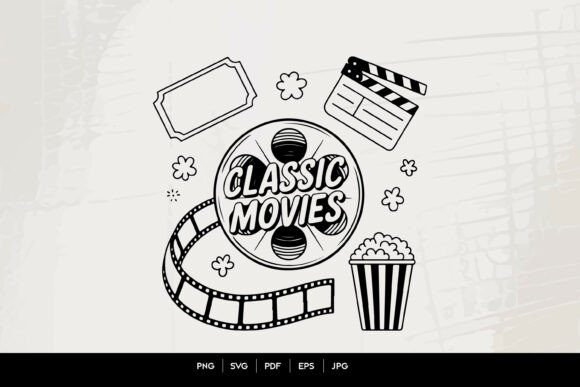
Classic Movies Cinema Line Art
A Designer’s First Look: Clean, Nostalgic, and Ready for Stitching
When I opened Classic Movies Cinema Line Art, my first thought wasn’t “cute” or “trendy”—it was “usable.” As someone who’s stitched hundreds of designs onto everything from baby onesies to boutique aprons, I appreciate line art that breathes on fabric instead of fighting it. This set feels like a well-curated vintage postcard collection—clapperboards, film reels, popcorn boxes, tickets, and theater marquees—all drawn with confident, consistent weight and intentional negative space. No overcrowding. No fragile hairline details. Just bold, rhythmic outlines that translate beautifully into satin stitch or running stitch without fuss.
Real-World Test: Embroidering a Custom Tote for a Film Lover’s Gift
Last week, I used one of the smaller motifs—a compact clapperboard with subtle “ACTION” lettering—as the centerpiece for a navy canvas tote bag. The goal? A thoughtful, handmade gift for a friend launching a film studies podcast. I chose a medium-density fill stitch for the background elements and kept the outer lines as clean satin stitches. It stitched flawlessly on my mid-arm machine using tear-away + light cutaway stabilizer. What stood out wasn’t just how sharp the edges stayed—it was how *recognizable* it remained at 3.2 inches wide. Customers don’t squint at embroidered gifts; they glance and smile. Classic Movies Cinema Line Art delivers that instant recognition, especially for buyers who value retro charm over flashy novelty.
Where It Shines (and Where It Needs Thought)
This isn’t a one-size-fits-all embroidery file—but that’s a strength, not a limitation. Here’s where it works best:
- Custom apparel: Sweatshirts, crewnecks, and denim jackets gain instant personality with a single film reel or ticket motif centered on the chest or sleeve.
- Tote bags & tea towels: The balanced proportions hold up beautifully on wider, stable surfaces—even when scaled to 4–5 inches.
- Embroidered patches: Several motifs are self-contained and edge-ready, ideal for iron-on or sew-on patches on caps, backpacks, or denim jackets.
- Baby and nursery items: The popcorn box or vintage camera design reads gently—playful but not cutesy—on organic cotton blankets or muslin pillow covers.
- Etsy listings & small shop branding: These graphics lend authenticity to printable mockups, social banners, and packaging labels without competing with your product photos.
Use With Care: Practical Embroidery Notes
While most motifs in Classic Movies Cinema Line Art are forgiving, a few need mindful handling:
- Small hoop sizes (under 4”): Avoid the multi-element compositions (e.g., full theater facade with marquee + popcorn + ticket). Stick to single-icon files—they scale down cleaner.
- Textured or stretchy fabrics: The line weight holds up well on terry cloth or lightweight knits, but always test stitch density first. Too much fill in tight corners can cause puckering on jersey or ribbed cotton.
- Dark or black fabric: The clean outlines pop best with high-contrast thread—think bright white, metallic silver, or deep burgundy. Avoid pale pastels unless you’re adding underlay or backing.
- Curved surfaces (caps, beanies): Choose motifs with rounded contours—the film reel and clapperboard adapt more naturally than angular marquees or rigid ticket stubs.
- Frequent-wash items (baby clothes, kitchen towels): Prioritize satin or stem stitches for outlines—they’re denser and more durable than delicate running-stitch flourishes.
Design Integrity Meets Handmade Value
What makes Classic Movies Cinema Line Art stand out isn’t just its theme—it’s how thoughtfully it supports the *craft*, not just the concept. When customers see this on a handmade product, they sense intention: no rushed digitizing, no pixelated edges, no awkward spacing between elements. That translates directly to perceived value. A customer paying $48 for an embroidered sweatshirt doesn’t just want a film reference—they want proof that you, the maker, understand proportion, texture, and wearability. This design set helps you deliver that quietly, confidently.
Designer-to-Designer Checklist Before You Stitch
- Test the embroidery file on scrap fabric matching your final project’s weight and stretch.
- Check thread color contrast—not just on white, but on your actual base fabric (a mockup photo saves time).
- Review stitch density in tight areas—especially inside letters or small icons—before hooping production fabric.
- Confirm hoop size compatibility: some larger compositions may require a 5x7 or bigger hoop.
- Inspect fine details at 100% zoom in your embroidery software—look for stray nodes or overlapping paths.
- Try a black-and-white version in your mockup tool: if it reads clearly there, it’ll read cleanly on fabric.
- Use appropriate stabilizer—light cutaway for knits, tear-away for stable wovens, and fusible for lightweight linens.
- Verify licensing terms before selling finished products or bundling the digital files—you’re responsible for commercial use compliance.
Final Thought: A Quietly Versatile Workhorse
Classic Movies Cinema Line Art won’t shout from a craft fair table—but it will earn repeat orders from customers who love subtle storytelling and quality execution. It’s the kind of design that elevates a plain apron into a conversation starter, turns a baby onesie into a keepsake, and gives your Etsy shop a cohesive, nostalgic voice. Whether you’re stitching for clients, building a craft business, or creating personalized gifts, this set earns its place in your embroidery library—not as decoration, but as reliable, expressive design assets.