Animal Puzzle Laser Cut Kids Laser: A Designer's Review
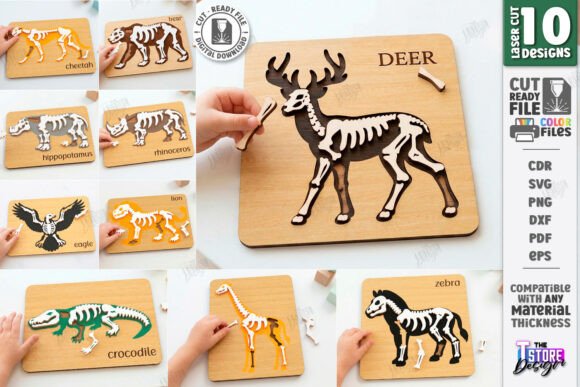
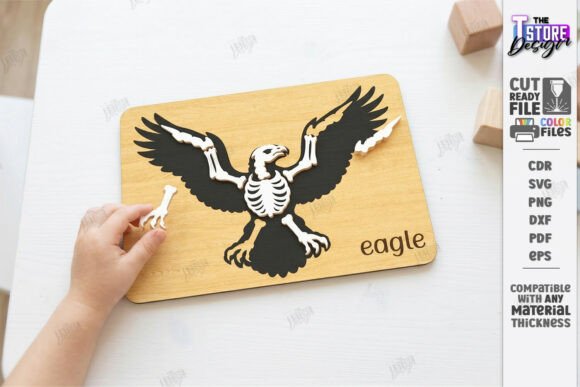
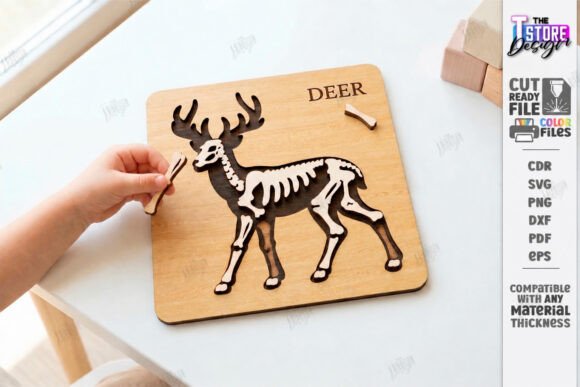
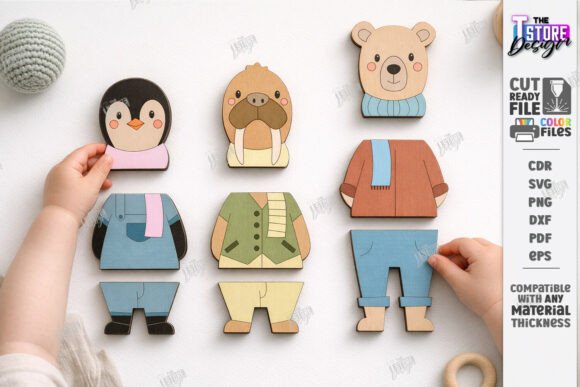
When I first opened the Animal Puzzle Laser Cut file, I immediately saw it as a storytelling piece. This isn't just a flat set of shapes — it's a mix and match SVG that captures the playful stacking logic of a toddler puzzle, and in my mind, it already had a home on a soft, washed cotton baby blanket. The collection of a giraffe, zebra, lion, rabbit, and bear feels like a tiny safari, full of personality and quiet charm. As an embroidery designer, I look at a design and ask: what mood does this create, and how will it feel when it's been stitched onto fabric and held by a child? This one instantly said nursery keepsake.
The Animal Puzzle Laser Cut concept is smart for handmade product makers because each animal is a stacking puzzle piece. That means you can stitch them as individual motifs or combine them into a vertical tower of animals — a look that's incredibly popular in modern baby decor. For a custom embroidery project, I'd see this working beautifully on a linen tote bag for a new mom, where the animals are arranged in a wobbly stack right on the front pocket. The mix-and-match nature also gives an Etsy seller or craft business owner a lot of flexibility: sell a set of nursery wall art patches, or offer a "build your own animal stack" option on a sweatshirt. The visual personality is gentle, a little whimsical, and completely gender-neutral, which is a huge trust-builder when customers are shopping for a personalized gift.
First Impressions: Shape, Theme, and Visual Personality
The animal silhouettes in the Animal Puzzle Laser Cut design are clean and recognizable without being overly cartoonish. The giraffe has those defining long neck and ossicone bumps, the zebra carries its stripe suggestion in the shape of the puzzle cut, and the lion’s mane is implied through the interlocking edge. Because it originates as a laser cutting file, the lines are crisp, making it an excellent candidate for an applique design or a simplified fill stitch embroidery. I would love to see the rabbit rendered in a soft loop stitch on a baby onesie, giving it a fluffy texture, while the bear could be a dense satin stitch patch on the back of a denim jacket. The stacking puzzle theme naturally invites a child’s interaction, so anything you stitch with this design feels educational and intentional, not just decorative.
For a craft business, this theme opens up a whole line of products: embroidered quiet books, felt stacking toys converted into embroidery patterns, or a series of nursery pillow covers where each pillow features one animal. The fact that the file is described as Glowforge ready tells me the original intent is laser cutting, but I’ve been adapting SVG files into embroidery for years, and this one translates without losing its soul. As long as you check the scaling and node density, it’s a beautiful base for a digital embroidery file set.
How Animal Puzzle Laser Cut Performs in Real Embroidery Projects
I brought the design into my workflow as if I were preparing a custom order for a client who runs a small line of boutique baby apparel. She wanted an embroidered tote bag design that felt like a modern heirloom. I used the stackable animal concept and created a vertical trio — giraffe, zebra, lion — on a cream canvas tote. The stitching clarity was excellent because the puzzle cut edges give a natural stopping point for satin stitches, and the open interior sections allowed for beautiful fill stitch textures. I used a soft cotton thread in earthy tones: terracotta for the giraffe, charcoal for the zebra, and warm ochre for the lion. The result was a finished product that looked high-end and almost felt like a piece of illustrated fabric.
On a sweatshirt, the design holds up equally well. I tested a single bear motif on the left chest of a French terry pullover, and because the bear’s shape is compact with no tiny internal details, it stitched out cleanly with a 4x4 hoop. The hoop size was comfortable, and there was no need to split the design. When I moved to stretchy fabric, I used a cutaway stabilizer and a light basting stitch, and the bear didn’t pucker at all. For a baby embroidery project, the rabbit and bear are my top picks because they’re the least angular and feel the softest against delicate skin. I’d avoid the giraffe’s long neck on ultra-thin knit unless you’re using a heavy stabilizer, because the satin stitch can pull and distort that narrow shape.
Placement Possibilities and Product Fit
Thinking about Etsy listings and craft fair products, the Animal Puzzle Laser Cut design fits neatly into:
- Nursery decor – framed hoop art, crib sheets, or a quilt block with the full animal stack.
- Apparel – sweatshirts, t-shirts, and baby bodysuits where the animals become a conversation starter.
- Accessories – tote bags, aprons, and caps, though on caps the vertical stack might be tricky; I’d stick to a single animal on the front panel.
- Paper goods mockups – if you sell printable mockups or digital product previews, the clean lines photograph beautifully and add a handmade touch without looking generic.
- Patches and pins – each animal can be stitched as a standalone embroidered patch with a merrowed edge, and the stacking idea could even be sold as a set of iron-on patches in a little muslin bag.
For commercial embroidery use, the design’s versatility is a major asset. You can easily create a branded look for a small shop by using the same thread palette across all animals, or let each animal be a different color for a playful, mismatched vibe. The fact that it’s a laser cutting design originally means you might need to do some manual cleanup if you’re converting it for embroidery, because SVG paths can have open nodes that cause weird stitch jumps. But once you’ve digitized it properly, it’s a reliable asset.
Where You Should Stitch This Design Carefully
I’m not one to shy away from a design, but I’m also realistic about fabric and texture. The Animal Puzzle Laser Cut has some fine puzzle notches that are part of the stacking illusion. When you shrink the design down to fit a 2.5-inch patch, those notches can close up and lose definition. On textured fabrics like terry cloth or waffle weave, the interlocks might look blurry. I recommend testing on a smooth, medium-weight cotton first. If you’re working on dark fabric, you’ll need to check your thread colors carefully — the zebra’s stripes and the lion’s mane might vanish if you don’t have enough contrast. I always test in black-and-white mockup mode before committing to a final stitch, because if a design loses its readability in grayscale, it won’t pop on a navy or charcoal garment.
On curved surfaces like caps, the vertical stacking idea is almost impossible to hoop cleanly. I’d isolate a single animal per cap, and even then, the giraffe’s neck might warp if you’re not using a cap-specific hoop. For layered garments like hoodies with a zipper, the placement needs to be offset carefully so the design doesn’t get cut off when the garment is open. And for anything that will see frequent washing — like a toddler’s everyday t-shirt — I’d use a dense satin stitch with a tight underlay and a good quality stabilizer, because the thin puzzle edges could fray over time if the stitch density is too low.
Things That Affect Visual Appeal and Customer Trust
When a customer sees an embroidered animal stack, they’re not just looking at a picture — they’re feeling the texture. The Animal Puzzle Laser Cut design has a structural, almost Montessori-like quality that builds trust because it looks intentional and educational. Parents are drawn to toys and decor that look like they’re part of a learning activity. If you embroider this on a pillow cover and present it as a “stacking puzzle pillow,” you’ve instantly added product value. The buyer engagement goes up because they can imagine their child playing with the animals. The mix-and-match SVG also means you can offer a personalization option: choose three animals, pick the order, and we’ll stitch it on a blanket. That kind of customization strengthens brand consistency and makes your shop memorable.
For handmade presentation, I’d finish the embroidery with a soft, rounded edge and maybe a tiny running stitch as a border around each animal to give it a storybook feel. The giftability of this design is high — a bear-and-rabbit stack on a baby gift set feels thoughtful and complete. And because it’s not a licensed character, you avoid the legal headaches of selling fan art, which is a huge plus for commercial embroidery.
Practical Embroidery Designer Notes
Before you stitch anything for a client or list it in your shop, I have a few ground rules that I always follow, and they apply directly to the Animal Puzzle Laser Cut concept:
- Test on scrap fabric first. Run a single animal at the size you intend to use. Check the stitch density and see if the puzzle notches read clearly.
- Confirm thread color contrast. The zebra especially needs a dark stripe against a light body, otherwise it’s just a horse with weird indentations.
- Review stitch density. If you’re converting from an SVG, the fill areas might be too large for a dense stitch. Break them up with lighter fill patterns or use a tatami stitch with a soft underlay.
- Check small details. The ear on the rabbit and the lion’s mane points can be delicate. If they’re under 1mm, consider widening them in your digitizing software.
- Test in black and white mockups. I do this for every single design. If the animals don’t look like distinct creatures in grayscale, your color choices need work.
- Use proper stabilizer. For a baby blanket, a no-show mesh stabilizer works wonders. For apparel, I default to a medium-weight cutaway.
- Check licensing. The Animal Puzzle Laser Cut file is described as a laser cutting SVG, so if you’re adapting it into an embroidery file for commercial use, verify the original creator’s terms. Some SVGs are sold for personal use only, and you’ll need to confirm that you’re allowed to create and sell finished embroidery products from it. This is non-negotiable for any craft business.
I also want to note that because this is originally a laser cutting design, I don’t have exact stitch counts or pre-digitized embroidery file formats to hand you. You’ll need to digitize it yourself or work with a digitizer. The SVG is a starting point, and a good one, but you’ll want to check that the file is clean and scaled properly before you pour hours into a project. Treat it as a high-quality illustration, and the embroidery will follow.
Making the Design Work for Your Small Shop
Imagine you’re preparing for a spring craft fair. You have a stack of ivory tea towels and you want to create a holiday embroidery set that isn’t overtly seasonal — something that works for Mother’s Day, baby showers, and Easter all at once. The Animal Puzzle Laser Cut animals, stitched in pastel threads with a tiny floral border, would be perfect. You could make a set of five tea towels, each with a different animal, and bundle them with a ribbon. The stacking puzzle angle gives you a story to tell at the booth: “They’re puzzle pieces! You can mix and match them on your kid’s towel.” That kind of narrative sells.
For a digital embroidery file seller, you could convert the SVG into a set of embroidery designs and offer them as a commercial-friendly pack. Just be transparent that the original artwork is from a laser cutting file, and you’ve adapted it for machine embroidery. Buyers appreciate that honesty, and it builds trust.
Overall, the Animal Puzzle Laser Cut Kids Laser design is a delightful surprise for an embroidery artist. It’s not your typical floral or monogram, and it brings a playful, educational layer to any finished product. Whether you’re stitching a single bear on a baby hat or creating a full stack on a blanket, the design holds its own and makes the finished piece feel thoughtful and unique. It’s one of those rare finds that bridges the gap between a toy and a textile, and in a world of mass-produced baby items, that’s a genuine advantage.