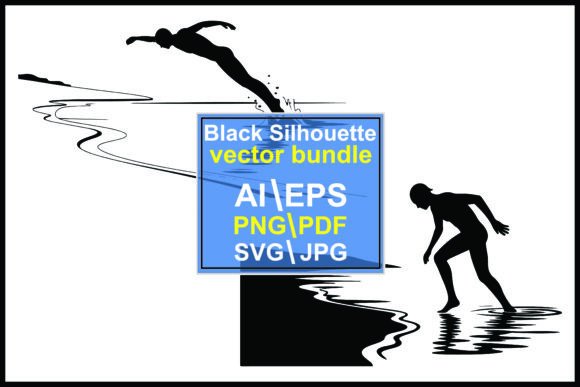
Silhouette of a Person Diving Water
A Clean, Confident Action Moment—Not Just Another Outline
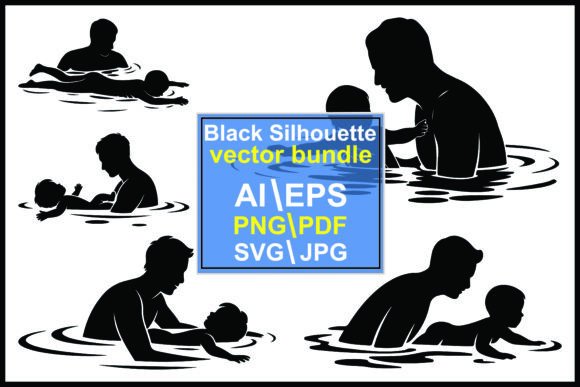
First impression? This isn’t a stiff clipart pose—it’s kinetic. The diving figure leans forward with real weight and momentum; the second figure stands grounded but alert at the edge. There’s implied motion in the curve of the spine, the angle of the arms, even the subtle suggestion of water displacement near the splash zone. As an embroidery designer who’s stitched hundreds of silhouettes, I can tell you: this one breathes. It avoids over-detail while preserving personality—no tiny fingers to vanish in fill stitch, no fragile limbs that’ll fray after three washes. That balance makes Silhouette of a Person Diving Water unusually versatile for real project use.
Where It Shines: Tote Bags, Sweatshirts, and Thoughtful Gifts
Last week, I prepped a custom embroidered tote for a local swim instructor’s summer camp giveaway. We chose Silhouette of a Person Diving Water centered on a heavyweight natural canvas bag—black thread on oat-colored fabric. Why it worked: the bold negative space around the figures let the stitching read clearly at 4.5 inches wide, the clean lines held up under medium-density fill stitch, and customers immediately “got” the theme without text. No confusion, no clutter—just confident, active energy.
It’s equally effective on sweatshirt embroidery (especially crewnecks or zip-ups), where the silhouette’s vertical rhythm complements the garment’s shape. For baby embroidery? Use the standing figure alone on a onesie pocket—gentle, quiet, and gender-neutral. On pillow covers or tea towels? It adds subtle recreation-themed charm without shouting. And for Etsy sellers listing digital embroidery files, this design pairs beautifully with minimalist mockups: think crisp white background, soft shadow, and a single line of handwritten-style font below reading “Dive In.”
Where to Pause—and Test First
Don’t assume it’s foolproof everywhere. On thin or stretchy fabrics like lightweight cotton voile or ribbed knit tees, the diving figure’s extended arm and arched back can distort if stabilizer isn’t layered thoughtfully. I recommend medium-weight cutaway + tear-away combo for anything with movement. On dark fabric, test thread color contrast carefully—some black-on-black satin stitch loses definition unless density is dialed up just right. And avoid placing it directly over seams or curved surfaces like cap fronts without adjusting placement: the edge figure’s feet and the diver’s toes are clean, but they’re not built for extreme distortion.
For embroidered patches, this design holds up well—but only if the outer edge is cleanly digitized with a tight satin border. If your version uses running stitch for outlines, reinforce those edges before cutting. And never skip the scrap-fabric test: run it on the exact fabric + stabilizer combo you’ll use, then wash and dry it once. See how the splash area holds up. Watch for thread nesting in the narrowest gaps between figures.
Design Integrity Meets Real-World Trust
Customers don’t buy silhouettes—they buy feeling. Silhouette of a Person Diving Water conveys freedom, focus, and joyful motion. That translates directly to perceived value: a handmade product with this stitched on feels intentional, not generic. For craft businesses and small shop owners, that matters. It supports brand consistency when used across a collection—say, matching pool towels, aprons for a swim school café, and holiday gift tags—all anchored by the same strong visual motif.
But here’s what builds trust faster than aesthetics: clarity in execution. If the diver’s hand blurs into the water line, or the standing figure’s outline disappears against a busy fabric texture, the whole piece reads as rushed—not handmade. So inspect the digital embroidery file closely: zoom in on corners, check whether stitch angles follow the curves smoothly, and confirm there’s no unnecessary underlay piling up in open areas. A well-digitized Silhouette of a Person Diving Water should stitch cleanly at 3.5–5 inches wide without heavy editing.
Practical Notes Every Embroiderer Should Keep Handy
- Always test first—on your target fabric, with your thread and stabilizer, before committing to client work or bulk production.
- Review stitch density: high density works on stable fabrics, but may cause puckering on knits or lightweight weaves.
- Confirm hoop size compatibility: if your machine maxes out at 4x4, verify the full composition fits—or be ready to split the two figures across placements.
- Check licensing before selling finished products or reselling the digital embroidery file. Since this falls under Illustrations and Graphics, usage rights vary widely—never assume commercial use is included.
- Use black and white mockups to preview contrast on both light and dark backgrounds—this design relies entirely on tonal separation.
- Match thread colors deliberately: matte polyester holds detail better than rayon for sharp edges; consider heathered thread for softer recreation vibes.
Final Thought: A Design That Earns Its Place
Silhouette of a Person Diving Water isn’t flashy—but it’s reliable. It doesn’t need embellishment to communicate. That’s rare in the world of machine embroidery design, where so many files chase trendiness over timelessness. Whether you’re building a craft business, personalizing gifts, or curating digital design assets for Etsy, this silhouette earns its spot because it stitches true, reads clearly, and resonates quietly. It’s the kind of embroidery file you keep in your “go-to” folder—not because it’s easy, but because it’s honest.