Ginkgo Leaf Outline: Graphics & Coloring Pages Amp
First Impressions: Calm, Elegant, and Surprisingly Versatile
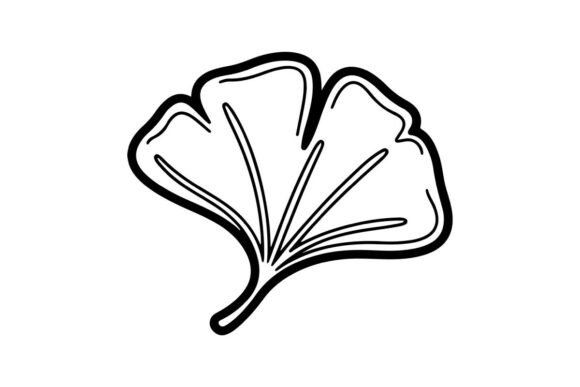
When I opened Ginkgo Leaf Outline in my design library, I immediately felt that quiet confidence you get with a well-crafted graphic design asset — not fussy, not overworked, but intentionally balanced. It’s elegant without being stiff, organic without losing clarity, and minimal without feeling empty. This isn’t “cute” or “festive” — it leans into serene sophistication, which makes it ideal for handmade businesses targeting mindful buyers: yoga studios ordering custom tote bags, wellness brands needing gift tags, or Etsy shops curating seasonal printable bundles for spring renewal or autumn reflection.
Real Crafting Workflow: From Screen to Shelf
I tested Ginkgo Leaf Outline across three real-world projects last week: a batch of sublimation mugs for a local wellness fair, a set of matte vinyl stickers for planner sticker sheets, and a limited-run tumbler wrap collection for my Etsy shop. In every case, the clean line art held up beautifully — no jagged edges in the SVG, no pixelation when scaled to 4” wide for mug wraps, and crisp transparency in the PNG version for layered digital mockups.
Here’s where it shines:
- Cricut & Silhouette projects: The SVG file imported cleanly into Design Space and Silhouette Studio — no stray anchor points or compound paths. I cut it on smooth white vinyl for gift tags and used the same file for iron-on transfers on linen tea towels.
- Sticker design: At 2.5”, the leaf retained all its graceful contour — perfect for die-cut planner stickers or kraft paper gift seals.
- Printable design & digital product bundles: Paired with a soft serif font (like Playfair Display), it elevated a simple “Thank You” printable card. I also dropped it into a seasonal Coloring Pages Amp bundle alongside botanical line drawings — customers loved the cohesive, meditative vibe.
- Small business branding: I used a simplified version (just the outer silhouette) as a subtle watermark on packaging labels and thank-you cards — reinforcing brand identity without overwhelming the message.
Where It Fits Best (and Why)
Ginkgo Leaf Outline thrives in contexts that value intentionality over intensity. It works exceptionally well for:
- Large-format cut files (tote bags, wall decals, fabric stencils)
- Clean, single-color printable layouts (planner pages, greeting cards, gift tags)
- Seasonal craft bundles — especially spring, fall, or mindfulness-themed collections
- Gift products with premium positioning (e.g., artisan soap labels, herbal tea sachet designs)
- Decorative accents on handmade packaging, thank-you cards, or product mockups
- Sublimation-ready designs for mugs, tumblers, and ceramic tiles (confirmed at 300 DPI)
Where to Use It Carefully
This isn’t a one-size-fits-all clipart solution. I learned this the hard way when I tried shrinking it to 0.75” for mini enamel pin mockups — the central vein detail blurred, and the stem became too fragile for precise cutting. So here’s my honest list of caution zones:
- Very small cutting details: Avoid under 1” unless you simplify the inner lines first.
- Thin-line vinyl projects: On textured surfaces like burlap or kraft paper, fine interior strokes may not transfer cleanly — test on your exact material.
- Crowded compositions: Don’t layer it densely with other botanicals unless you adjust spacing — its elegance comes from breathing room.
- Low-contrast color applications: On heather grey shirts or cream stationery, use a bold outline stroke or shadow effect to maintain readability.
- Layered vinyl projects: The SVG doesn’t include pre-separated layers — you’ll need to ungroup and manually assign colors if doing multi-layer weeding.
Practical Crafter Notes You’ll Actually Use
Before adding Ginkgo Leaf Outline to customer orders or shop listings, do these five things:
- Test the SVG in your cutting software — check for hidden layers, double lines, or embedded raster elements.
- Preview the PNG with transparency on both white and dark backgrounds — does the edge hold? Does it look sharp against black vinyl or navy tote fabric?
- Confirm resolution for sublimation — open in Photoshop or Affinity Photo and verify it hits 300 DPI at your intended print size.
- Test print on your actual paper stock — especially for printable wall art or greeting cards — some inkjet printers mute fine linework.
- Resize thoughtfully — scale uniformly, and avoid stretching. When adapting for tumbler wraps, I duplicated the leaf and rotated copies to create a subtle repeating motif — far more effective than cramming in extra elements.
Font Pairing & Brand Alignment Tips
The clean, flowing shape of Ginkgo Leaf Outline pairs beautifully with type that echoes its rhythm: a gentle script font for handwritten-style gift tags, a warm sans serif (like Montserrat Light) for modern planner stickers, or a refined serif (Cormorant Garamond) for luxury printable art. I avoided bold display fonts — they clashed with the leaf’s quiet confidence. For small business branding, I used it alongside a minimalist logo lockup and kept color palettes restrained: sage + cream, charcoal + oat, or terracotta + ivory.
Commercial License Check: Non-Negotiable for Handmade Businesses
Yes — Ginkgo Leaf Outline includes a commercial license, verified in the download folder. That means I can legally use it in physical products (stickers, mugs, totes), digital products (printables, Canva templates), and even POD platforms — as long as I’m not reselling the raw SVG/PNG as standalone clipart. Always recheck license terms before launching an Etsy product or craft fair inventory, especially if bundling with other design assets.
Final Thought: A Quiet Workhorse for Intentional Making
Ginkgo Leaf Outline won’t shout from a craft fair table — but it will draw the right kind of attention. The kind that lingers. The kind that says, “This was made with care.” For handmade sellers building thoughtful, repeatable collections — whether you’re designing Cricut projects, printable wall art, or small business branding — this is the kind of graphic design asset that earns its place in your core toolkit. Not flashy. Not trendy. Just quietly, consistently useful.